
Saturday, February 11, 2023


راستے کے حقوق وآداب
راستے کے حقوق وآداب
از: خورشید عالم داؤد قاسمی٭
Email: qasmikhursheed@yahoo.co.in
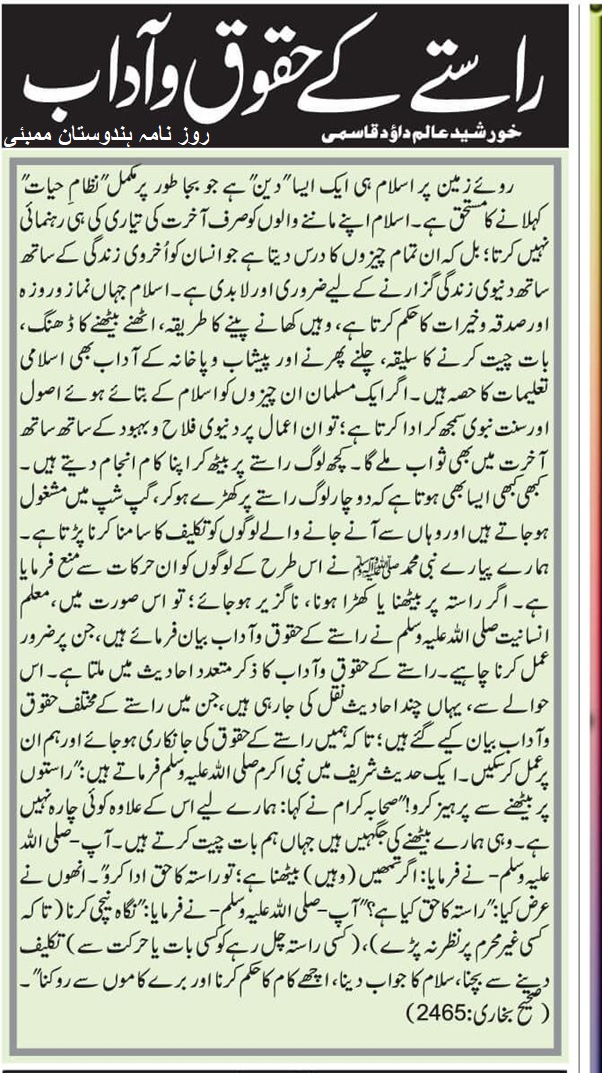
روئےزمین پر اسلام ہی ایک ایسا "دین"ہے جو بجا طور پر مکمل "نظامِ حیات" کہلانے کا مستحق ہے۔ اسلام اپنے ماننے والوں کو صرف آخرت کی تیاری کی ہی رہنمائی نہیں کرتا؛ بل کہ ان تمام چیزوں کا درس دیتا ہے جو انسان کواُخروی زندگی کے ساتھ ساتھ دنیوی زندگی گزارنے کے لیے ضروری اور لابدی ہے۔ اسلام جہاں نماز وروزہ اور صدقہ وخیرات کا حکم کرتا ہے، وہیں کھانے پینے کا طریقہ، اٹھنے بیٹھنے کا ڈھنگ، بات چیت کرنے کا سلیقہ، چلنے پھرنےاور پیشاب وپاخانہ کے آداب بھی اسلامی تعلیمات کا حصہ ہیں۔ اگر ایک مسلمان ان چیزوں کو اسلام کے بتائے ہوئے اصول اور سنت نبوی سمجھ کر ادا کرتا ہے؛ تو ان اعمال پر دنیوی فلاح و بہبود کے ساتھ ساتھ آخرت میں بھی ثواب ملے گا۔
کچھ لوگ راستے پر بیٹھ کر اپنا کام انجام دیتے ہیں۔ کبھی کبھی ایسا بھی ہوتا ہے کہ دو چار لوگ راستے پر کھڑے ہوکر، گپ شپ میں مشغول ہوجاتے ہیں اور وہاں سے آنے جانے والے لوگوں کو تکلیف کا سامنا کرنا پڑتا ہے۔ ہمارے پیارے نبی محمد –صلی اللہ علیہ وسلم–نے اس طرح کے لوگوں کو ان حرکات سے منع فرمایا ہے۔ اگر راستہ پر بیٹھنا یا کھڑا ہونا، ناگزیر ہوجائے؛ تو اس صورت میں، معلم انسانیت صلی اللہ علیہ وسلم نے راستے کے حقوق وآداب بیان فرمائے ہیں، جن پر ضرور عمل کرنا چاہیے۔
راستے کے حقوق وآداب کا ذکر متعدد احادیث میں ملتا ہے۔ اس حوالے سے، یہاں چند احادیث نقل کی جارہی ہیں،جن میں راستے کے مختلف حقوق وآداب بیان کیے گئے ہیں؛ تا کہ ہمیں راستے کے حقوق کی جانکاری ہوجائے اور ہم ان پر عمل کرسکیں۔
ایک حدیث شریف میں نبی اکرم صلی اللہ علیہ وسلم فرماتے ہیں: "إِيَّاكُمْ وَالجُلُوسَ عَلَى الطُّرُقَاتِ"، فَقَالُوا: "مَا لَنَا بُدٌّ، إِنَّمَا هِيَ مَجَالِسُنَا نَتَحَدَّثُ فِيهَا"، قَالَ: "فَإِذَا أَبَيْتُمْ إِلَّا المَجَالِسَ، فَأَعْطُوا الطَّرِيقَ حَقَّهَا"، قَالُوا: "وَمَا حَقُّ الطَّرِيقِ؟" قَالَ: "غَضُّ البَصَرِ، وَكَفُّ الأَذَى، وَرَدُّ السَّلاَمِ، وَأَمْرٌ بِالْمَعْرُوفِ، وَنَهْيٌ عَنِ المُنْكَرِ". (صحيح بخاری، برقم: 2465) ترجمہ: "راستوں پر بیٹھنے سے پرہیز کرو!" صحابہ کرام نے کہا: ہمارے لیے اس کے علاوہ کوئی چارہ نہیں ہے۔ وہی ہمارے بیٹھنے کی جگہیں ہیں جہاں ہم بات چیت کرتے ہیں۔ آپ - صلی اللہ علیہ وسلم- نے فرمایا: "اگر تمھیں (وہیں) بیٹھنا ہے؛ توراستہ کا حق ادا کرو"۔ انھوں نے عرض کیا: "راستہ کا حق کیا ہے؟" آپ -صلی اللہ علیہ وسلم- نے فرمایا: "نگاہ نیچی کرنا (تاکہ کسی غیر محرم پر نظر نہ پڑے)، (کسی راستہ چل رہے کوکسی بات یا حرکت سے) تکلیف دینے سے بچنا، سلام کا جواب دینا، اچھے کام کا حکم کرنا اور برے کاموں سے روکنا"۔
ایک دوسری حدیث میں رسول اکرم صلی اللہ علیہ وسلم فرماتے ہیں: "لَا تَجْلِسُوا فِي الصُّعُدَاتِ وَلَا فِي الْأَفْنِيَةِ"، قَالُوا: "يَا رَسُولَ اللهِ! لَا نَسْتَطِيعُ ذَلِكَ". قَالَ: «إِمَّا لَا فَأَعْطُوهَا حَقَّهَا»، قَالُوا: "يَا نَبِيَّ اللهِ! وَمَا حَقُّهَا؟" قَالَ: "رَدُّ التَّحِيَّةِ، وَغَضُّ الْبَصَرِ، وَتَشْمِيتُ الْعَاطِسِ، وَإِرْشَادُ السَّبِيلِ". (مسند ابی یعلی الموصلي 11/480، شعب الایمان 10/93 صحیح ابن حبان 2/357) ترجمہ: "عام راستوں اور صحنوں میں مت بیٹھو!" انھوں (صحابۂ کرام رضی اللہ عنہم ) نے کہا: اے اللہ کے رسول(صلی اللہ علیہ وسلم)! یہ ہمارے لیے ممکن نہیں ہے۔ آپ - صلی اللہ علیہ وسلم - نے فرمایا: "اگر نہیں ؛ تو راستہ کا حق ادا کیا کرو!" انہوں (صحابہ کرام ) نے عرض کیا: اے اللہ کے نبی(صلی اللہ علیہ وسلم)! راستہ کا حق کیا ہے؟ آپ - صلی اللہ علیہ وسلم - نے فرمایا: "سلام کا جواب دینا، نگاہ نیچی رکھنا، چھیکنے والے کی چھینک پر جواب دینا اور (بھولے بھٹکے کو) راستہ کی رہنمائی کرنا"۔
یہاں دو حدیثیں نقل کی گئیں ہیں۔پہلی حدیث میں راستے کے پانچ حقوق وآداب بیان کيے گئے ہیں؛ جب کہ دوسری حدیث میں چار حقوق بیان کیے گئے ہیں۔مشہور شارح حدیث علامہ ابن حجر عسقلانی نے راستے کے چودہ آداب بیان نقل کیے ہیں۔ وہ آداب یہ ہیں: "سلام پھیلانا، اچھی گفتگو کرنا (اگر کوئی راستہ چل رہا شخص کچھ پوچھے؛ تو اسے عمدہ لب ولہجہ میں جواب دینا اور رہنمائی کرنا)، چھیکنے والے کی چھینک کا جواب دینا، اچھے انداز میں سلام کا جواب دینا، کسی کو بوجھ اٹھانے میں مدد کرنا، مظلوم کی مدد کرنا، مصیبت زدہ کی مدد کرنا،راہ بھٹکے لوگوں کی رہنمائی کرنا، حیران و پریشان کی رہنمائی کرنا، نیک کاموں کا حکم کرنا،برے کاموں سے روکنا، کسی کو (ہاتھ یا زبان سے) تکلیف دینے سے بچنا، نگاہوں کو پست رکھنا (تاکہ کسی غیر محرم پر نظر نہ پڑے)، اللہ سبحانہ وتعالی کا کثرت سے ذکر کرنا۔" (فتح الباري لابن حجر 11/11)
حدیث کی کتابوں میں اور بھی کئی احادیث راستے کے حوالے سےپائی جاتی ہیں۔ ان میں سے چند کو یہاں نقل کیا جارہا ہے۔ ایک حدیث شریف میں راستے سے تکلیف دہ چیزوں کے ہٹانے کو صدقہ کہا گیا ہے۔ ارشاد نبوی ہے: «يُمِيطُ الأَذَى عَنِ الطَّرِيقِ صَدَقَةٌ». (صحیح البخاري عن أبي هريرة رضي الله عنه، برقم: 2989) مطلب یہ ہے کہ اگر کوئی شخص راستے سے ایسی چیزوں کو ہٹادے؛ جو تکلیف کا سبب بن سکتی ہے؛ تو گویا یہ عمل اس شخص کی طرف سے صدقہ ہےاور اس شخص کو صدقہ کا ثواب ملے گا۔
ایک حدیث میں ہے کہ حضرت ابو برزہ رضی اللہ عنہ نے سوال کیا کہ اے اللہ کے نبی (صلی اللہ علیہ وسلم) مجھے کچھ ایسا عمل بتادیجیے جس سے میں فائدہ اٹھاؤں؛ تو آپ صلی اللہ علیہ وسلم نے ارشاد فرمایا: «اعْزِلِ الْأَذَى عَنْ طَرِيقِ الْمُسْلِمِينَ». (صحیح مسلم عن أبي برزة: 2618) ترجمہ: "مسلمانوں کے راستے سے تکلیف دہ چیز کو ہٹادو!"
ایک روایت میں ہے کہ ایک شخص کسی راستے سے گزر رہا تھا۔ اسے راستے پر ایک کانٹے والی ٹہنی ملی، اس شخص نے اسے ہٹادیا۔ اللہ تعالی نے اس شخص کے (اس عمل )کی قدر کی؛ چناں چہ اس کی مغفرت فرما دی۔ حدیث درج ذیل ہے: «بَيْنَمَا رَجُلٌ يَمْشِي بِطَرِيقٍ، وَجَدَ غُصْنَ شَوْكٍ عَلَى الطَّرِيقِ، فَأَخَذَهُ، فَشَكَرَ اللَّهُ لَهُ، فَغَفَرَ لَهُ». (صحیح البخاري عن أبي هريرة رضي الله عنه، برقم: 2472)
ان مذکورہ بالا احادیث سے یہ بات سمجھ میں آتی ہے کہ اگر راستہ پر کانٹا ہو، کوئی ایسا چھلکا ہو، جس پر آدمی پھسل سکتا ہے، کانچ وغیرہ کا ٹکڑا ہو یا پھر کوئی دوسری ایسی چیز ہو، جو تکلیف دہ ہو؛ تو اسے ہٹانے دینا چاہیے۔ یہ عمل اس شخص کی طرف سے صدقہ ہوگا۔
راستے کے یہ جو حقوق وآداب بیان کیے گئے ہیں،ہمیں ان آداب کی پوری رعایت کرنی چاہیے؛ تاکہ راستے سے گزرنے والوں کو تکلیف نہ پہنچے۔ یہ بات نہ صرف راستے کے حوالے سے؛ بلکہ ہم اپنی زندگی کا اصول ہی بنالیں کہ ہم کوئی ایسا کام نہ کریں جس سے اللہ کی کسی مخلوق کو تکلیف پہنچے۔ پھر ہم دوسروں کو دعوت بھی دیں کہ وہ کوئی ایسا کام نہ کرے جس سے کسی کو تکلیف پہنچے۔ یہ ہمارے نبی اکرم –صلی اللہ علیہ وسلم– کی ہدایت بھی ہے کہ ہم کسی کو تکلیف نہ پہنچائیں۔ ہماری کامیابی کا راز نبی اکرم صلی اللہ علیہ وسلم کے بتائے ہوئے طریقے میں ہی مضمر ہے۔ اگر ہم چاہتے ہیں کہ ہم دنیا وآخرت میں کامیابی حاصل کریں؛ تو ہمیں نبی کریم –صلی اللہ علیہ وسلم – کی سنتوں کو اپنانا ہوگا، ان کے بتائے ہوئے راستے پر چلنا ہوگا اور ان کے ہدایات وارشادات کو اپنے گلے سے لگانا ہے۔ یہی وہ سنتیں، ہدایتیں اور طریقے ہیں جن کو اپنا کر صحابۂ کرام – رضی اللہ عنہم– پوری امت کے لیے نمونہ بن گئے؛ چناں چہ نبی اکرم –صلی اللہ علیہ وسلم– نے خود اپنی زبان مبارک سے فرمایا: میرے صحابۂ ستارے کے مانند ہیں، ان میں جس کسی کی بھی اقتدا کرلو، ہدایت یافتہ ہوجاؤگے۔ اگر ہم بھی نمونہ بننا چاہتے ہیں؛ تو ہمیں بھی ان ارشادات اور ہدایات پر عمل کرنا ہوگا۔ ****
٭ہیڈ: اسلامک ڈپارٹمنٹ، مون ریز ٹرسٹ اسکول، زامبیا، افریقہ
Rights of the Way in Islam
Rights of the Way in Islam
By: Khursheed Alam Dawood Qasmi*
Islam is only religion on the surface of the earth which deserves to be called the complete system of the life. Islam doesn’t guide its followers only to prepare for the hereafter; but it also instructs about all those things, actions and activities which are necessary for a person to live a perfect human life in a society. As Islam orders its followers to offer five times Salah, to fast in the month of Ramadhan etc., it also teaches them the etiquettes of eating and drinking, siting and walking, talking and chatting, even answering the call of nature etc. as all these are the parts of Islam. Here it seems to be appropriate to quote the conversation of Salman Farsi (RA) with a certain Jew (Badhl Al-Majhud: 1/185) who questioned about the Islamic teaching about answering the call of nature with the intention of fault-finding. The Jew asked: "Has your Prophet taught you everything, even how to defecate?" Slman (RA) replied, "Yes! He prohibited us from facing the Qiblah while defecating or urinating, and from cleansing ourselves with our right hands, and from cleansing ourselves with less than three stones or with dung or bones." (Sunan Abu Dawood: 07) In brief, if the people act upon Islamic instructions according to the Islamic guidelines and considering them the Sunnah of the beloved Prophet Muhammad (Sallallahu Aleihi Wa Sallam), they will get success in the world along with being rewarded in the hereafter, In Shaa Allah.
Some people do their works sitting on a way. Sometimes, it is observed that some people start chit chat and idle talks standing on the road; while the passersby feel problem due to them. The beloved Prophet Muhammad (SAWS) has stopped from such action. If sitting or standing on the road is very essential, the people should follow the rights and the etiquettes of the way given by Allah’s Messenger (SAWS).
There are numerous narrations which speak about the rights and the etiquettes of the way. In this reference, some narrations are quoted here where one can find those rights.
It is narrated by Abu Saeed Khudri (RA) that the Prophet (SAWS) said: "Beware, avoid sitting on the roads!" The people said: "There is no way out of it as these are our sitting places where we have talks". He (SAWS) said: "If you must sit there, then observe the rights of the way". They asked: "What are the rights of the way?" He (SAWS) said: "They are lowering of your gazes (on seeing what is illegal to look at), refraining from harming people, returning greetings, commanding (others to do) what is good and forbidding (other from) what is evil". (Sahih Al-Bukhari: 2465)
There is one another narration where Allah’s Messenger (SAWS) guides: “Do not sit on the road and not in the courtyards”. The companions (RA) said: “O Allah’s Messenger (SAWS)! It is not possible (as they are our sitting places)”. He (SAWS) said: “If not, then observe their rights”. They said: “O Prophet of Allah (SAWS)! What are its rights?” He (SAWS) replied: “Replying the greetings, lowering of the gazes, responding to the sneezer, guiding the way (for the one who has missed right path.)”. (Sahih Ibn Habban, 2/357)
Two Ahaadeeth have been quoted here. There are five rights and the etiquettes of the way mentioned in the first Hadeeth; whereas four rights have been said in the second narration. The famous commentator of Sahih Al-Bukhari, Allamah Ibn Hajar Asqalani (1372-1448) has written 14 etiquettes of the road. They are mentioned here. (1) To spread greetings, (2) to talk politely and tenderly (If a passerby asks something, he should be answered tenderly and guided.), (3) to respond one who sneezes, (4) to return the greeting in polite manner, (5) to assist someone in lifting the luggage, (6) to assist the oppressed one, (7) to assist the one who is afflicted or troubled, (8) to guide the one who has lost his way, (9) to guide the one who is restless and confused, (10) to command to do good deed, (11) to forbid from evil, (12) to refrain from harming others (form the tongue or the hand), (13) to lower one’s gazes from seeing what is illegal and (14) to remember Allah abundantly.” (Fath Al-Bari: 11/11)
There are some other narrations related to the road. In one narration, after mentioning several deeds of charity, the Prophet (SAWS) has counted removing a harmful thing from the way as the charity too. The narration goes like this: “To remove a harmful thing from the way is also a charity”. (Sahih Bukhari: 2989) The simple explanation of the Hadith is that if a person finds something fallen on the way which can harm the people, e.g. broken glass, thorn, nail etc., he removes it with the intention of the protecting the people, this action will be counted as charity on his behalf and he will be rewarded for it.
Abu Burzah (RA), one of the companions of the Prophet (SAWS), asked him (SAWS) to guide him to do something which can be counted as good deed. The Prophet (SAWS) replied: “Remove the harmful thing from the way of the Muslims.” (Sahih Muslim: 2618)
According to one Hadith which is narrated by Abu Hurairah (RA) that Allah's Messenger (SAWS) said: "While a man was on the way, he found a thorny branch of a tree there on the way and removed it. Allah appreciated him for that deed and forgave him." (Sahih Bukhari: 2472) This Hadith makes it clear that removing a thorny branch from the way is a good deed and its doer was forgiven due to this deed.
It is understood by these narrations that if a person find something dangerous fallen on the way which can harm a walking person, it should be removed. Such action is taken as the charity on behalf of the one who has removed it. How beautiful teaching of Islam is!
As the responsible citizens and sensible members of a society, we should take care of those rights and the etiquettes of the way mentioned in the narrations in order to protect the fellow member from any type of the harm, trouble and disturbance. Not only concerning the road, but we should move some steps ahead and make the rule of our lives that we would not commit any action which is harmful even in the least degree for a fellow human being to prove that we are true followers of Islam and disciplined citizens. Then we should also preach what we practice in our societies. It is the instruction and the teaching of our beloved Prophet Muhammad (SAWS) that none should be harmed by us. The Messenger of Allah (SAWS) said: "The Muslim is the one from whose tongue and hand the people are safe, and the believer is the one from whom the people's lives and wealth are safe." (Sunan Nasa’iee: 4995)
Our success lies in following the path shown by our Prophet (SAWS). If we want success in the world and the hereafter, we will have to follow the Sunnah and method of the Prophet (SAWS). We will have to embrace his instructions and teachings in our day-to-day lives. It is the Sunnah and the instructions of the Prophet (SAWS) that by abiding by them the companions (RA) became the role model for the whole Ummah. Allah’s Messenger (SAWS), therefore, said: “My companions are like the stars, whoever of them you will follow, you will be guided.” (Razeen)****
*Moon Rays Trust School, Zambia, Africa
Email: qasmikhursheed@yahoo.co.in


Subscribe to:
Posts (Atom)

-
My Open Letter to Noted Journalist MJ Akbar By: Khursheed Alam Dawood Qasmi Dear Sir, Your decision to join the BJP, an opportun...
-
Al-Fauz Al-Kabeer: A Brief Introduction By: Khursheed Alam Dawood Qasmi Email: qasmikhursheed@yahoo.co.in Compilation...
